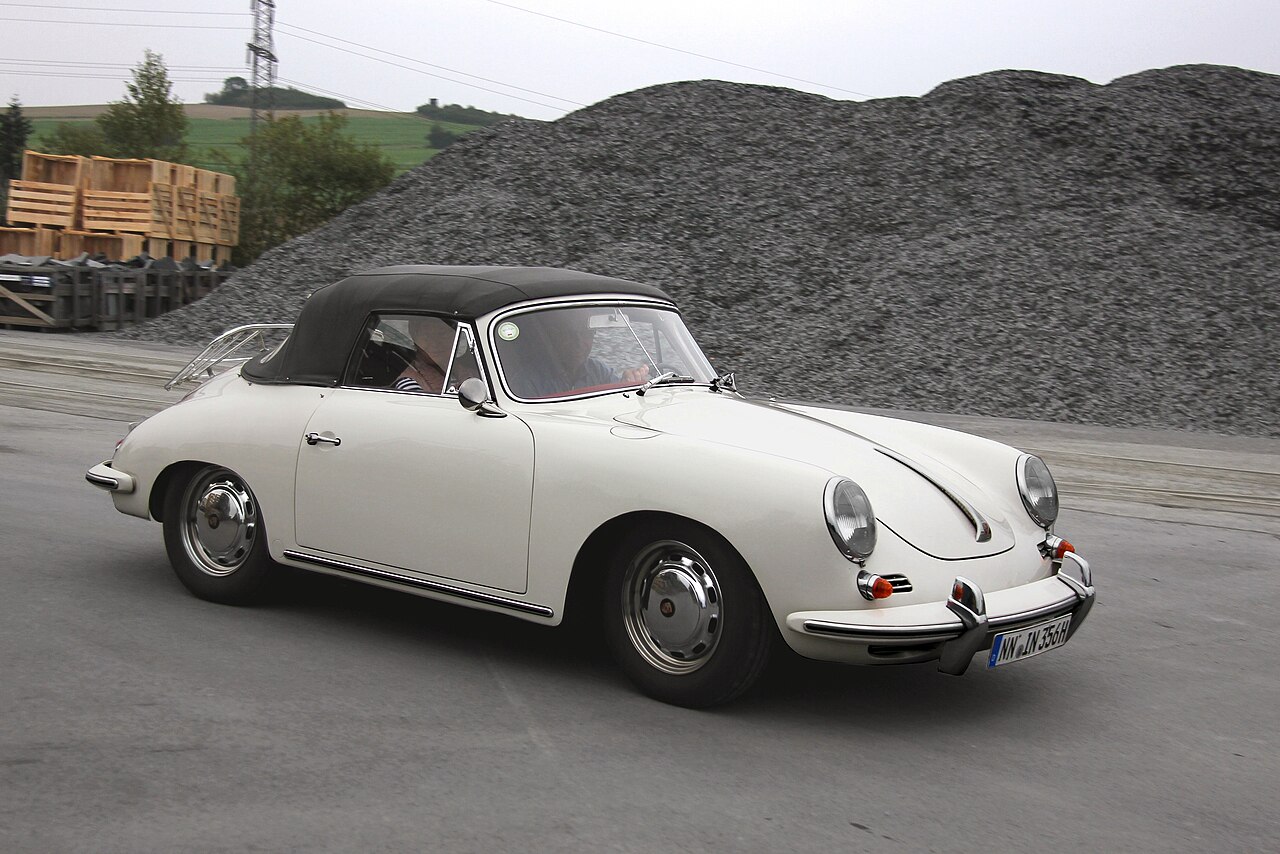
Compare Porsche 356 Pre-A, A, B and C series, open and closed bodies, and Carrera engines, with identification clues and questions for a specialist inspection.
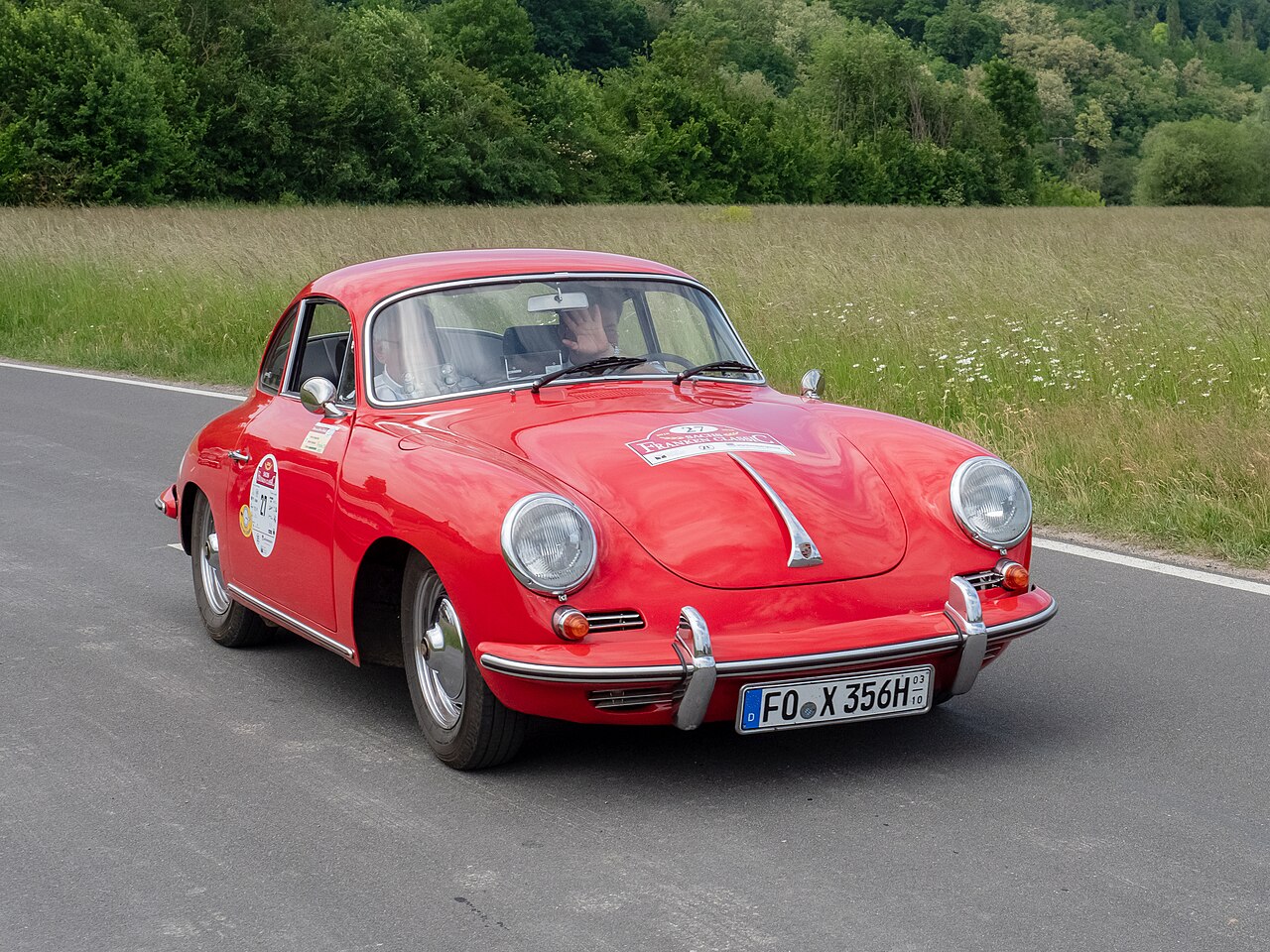
Pictured example: red. Original factory paint and paint code are not verified.Photo: Ermell, CC BY-SA 4.0License termsDownloaded as a Wikimedia Commons 1280px thumbnail for local display.
Design and engineering in photographs
Notable Porsche 356 examples
Three examples selected for the distinctions they make visible. Each photograph shows a particular car; its appearance is not a factory paint certificate.
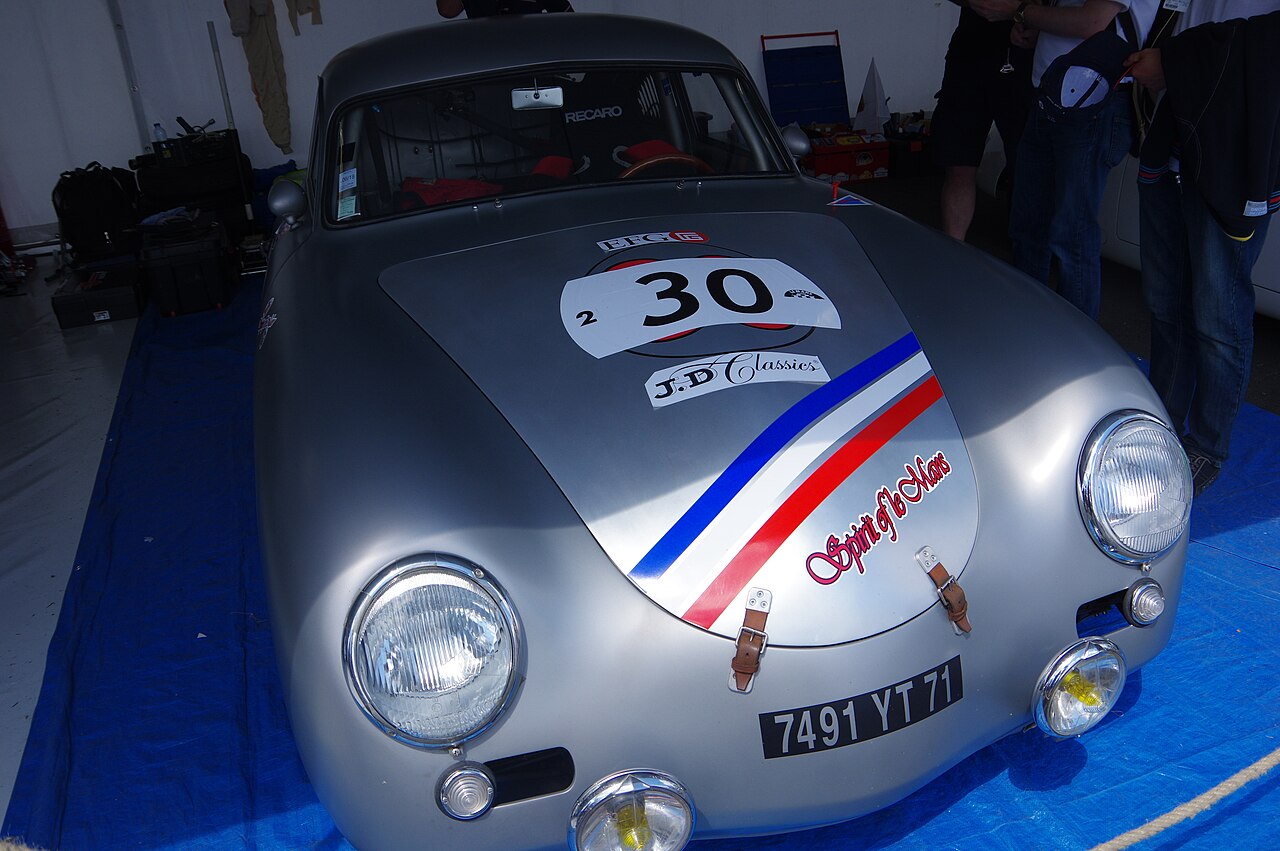
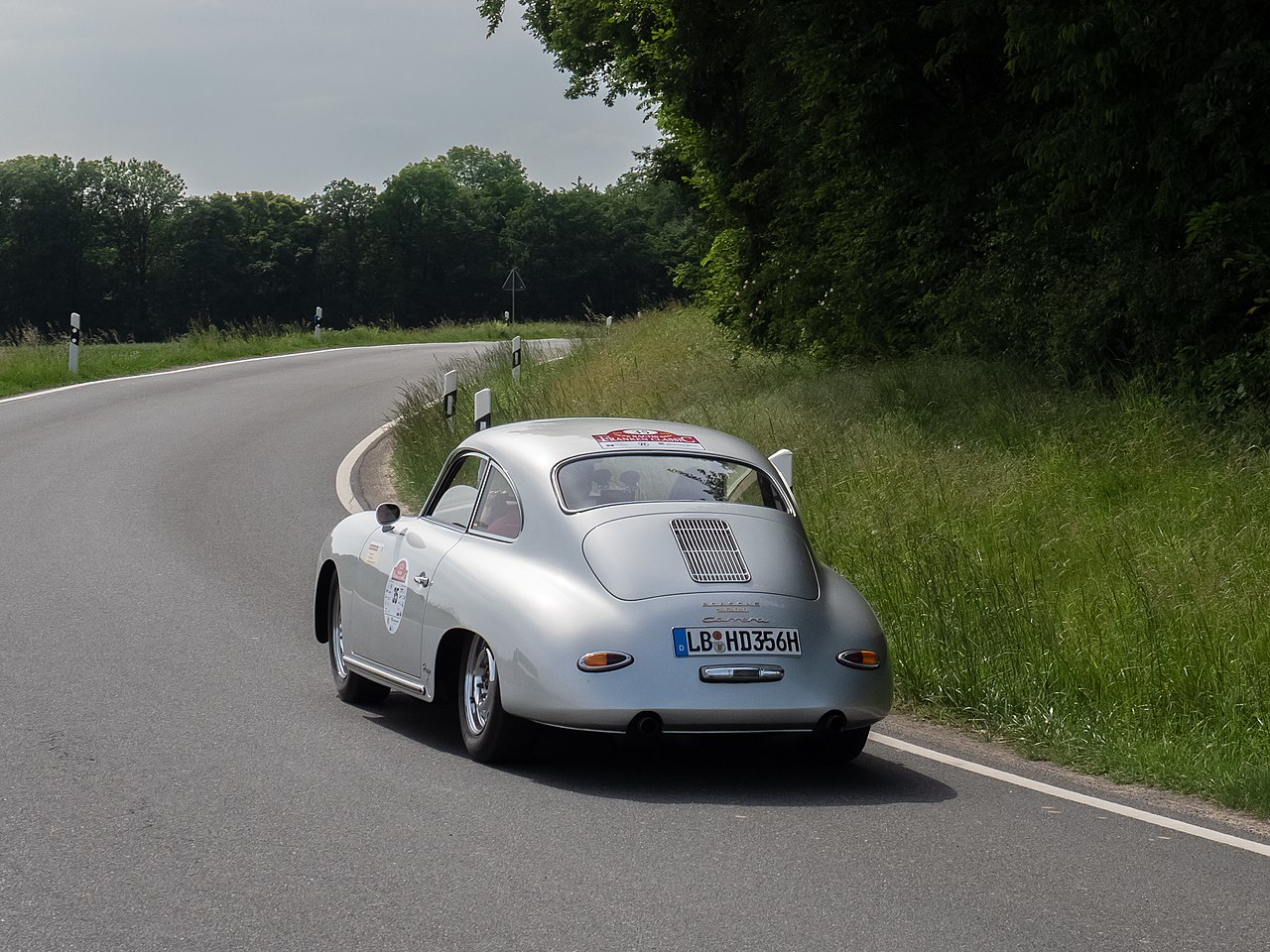
The silver-grey competition-liveried coupe shows the early 356 silhouette. Porsche’s original-series guide distinguishes the later centre-creased windscreen from the curved pane introduced with the A; the racing graphics describe this photographed example, not a factory trim.
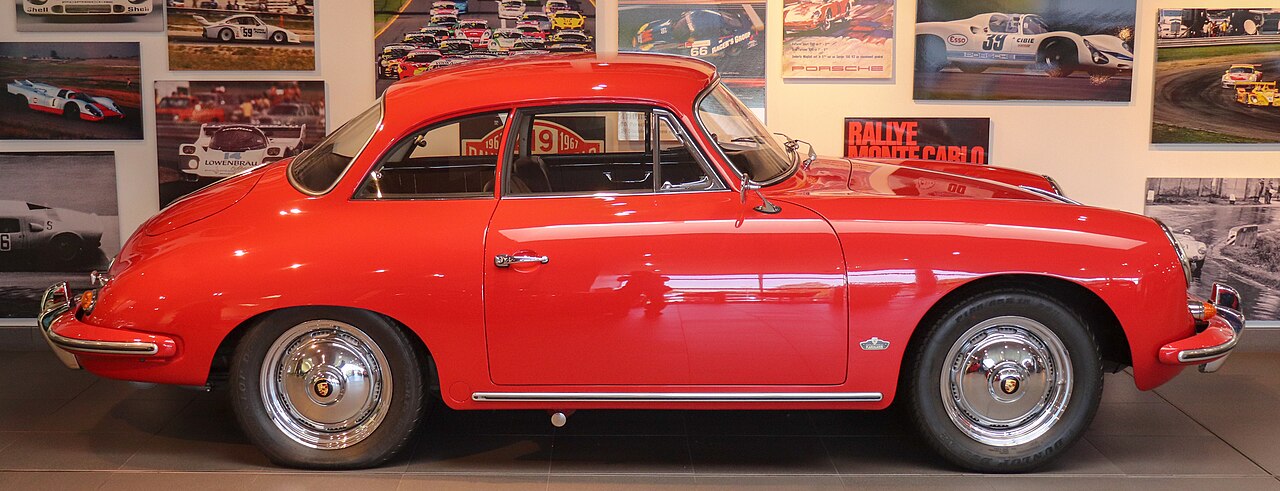
The red coupe illustrates the late B body. Porsche dates the T6 revision to September 1961: a wider lower bonnet outline, a right-front-wing fuel filler and twin engine-lid ventilation grilles separate it from the earlier T5.
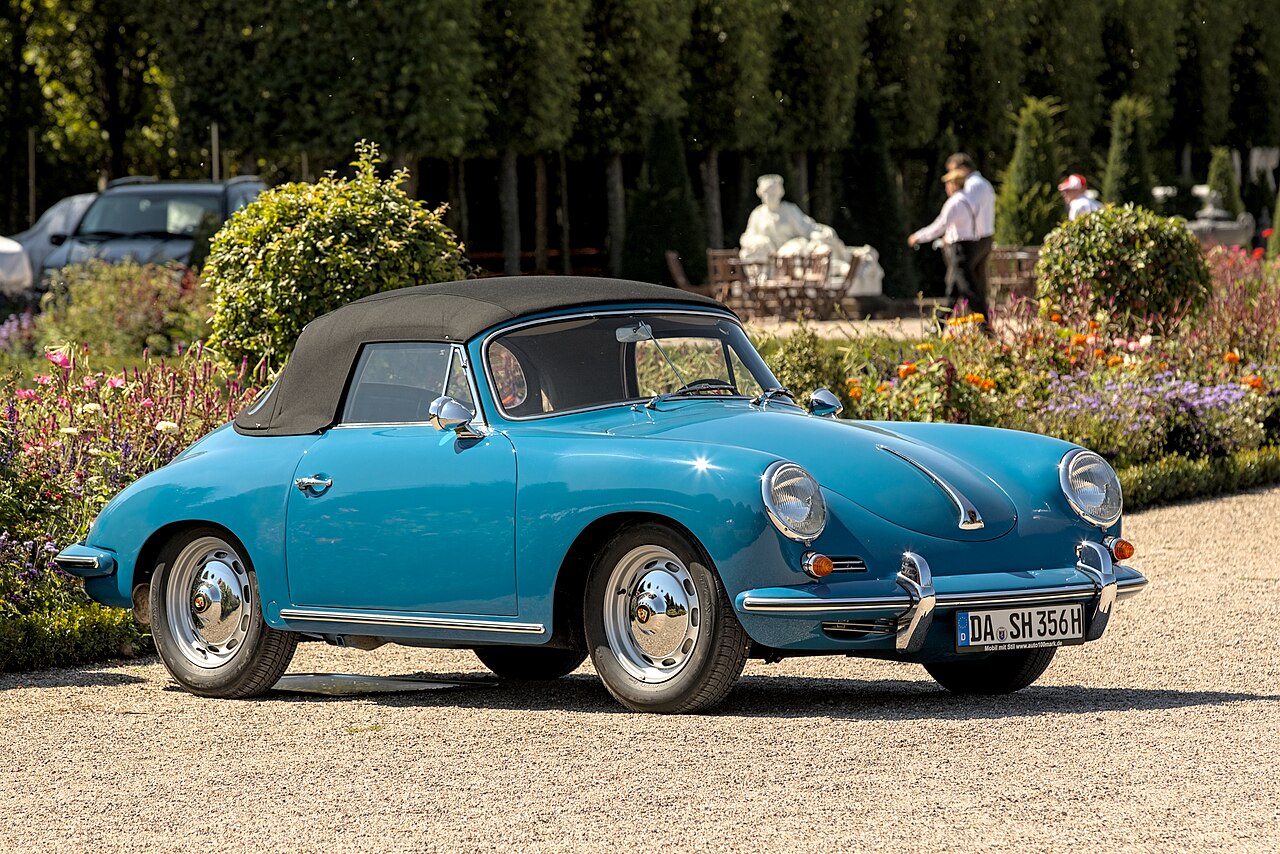
The blue example with a dark fabric roof makes the open-body choice tangible. Porsche’s B-series reference lists the 1600, Super and Super 90 Roadsters separately; the photograph establishes the body example, not which engine is installed.
Start with the series (Pre-A, A, B or C), then identify the body and engine. T5 and T6 are revisions within the B series, while Speedster is a body choice and Carrera identifies a mechanical performance family. These labels can describe the same car; they are not twelve successive generations.
Dates below are broad family periods, not a chassis-number decoder. Launch, model-year and final-delivery dates can differ; body and engine availability depend on year and market. Photographs illustrate examples and do not authenticate another car.
356 series and body revisions
Porsche 356 — 356 series and body revisions
Reference
Period
Category
Body / engine
Comparison or inspection question
356 / Pre-A
1948-1955
Series
Coupe, cabriolet, early roadster Air-cooled flat-four
Distinguish divided and later centre-creased windscreens; establish which early body and mechanical specification the build record describes.
356 A
1955-1959
Series
Coupe, cabriolet, Speedster, Convertible D 1.6-liter flat-four family
Curved windscreen marks the A; separate normal and Super engines from the mechanically different Carrera.
356 B T5
1959-1962
Series
Coupe, cabriolet, Roadster Flat-four, including Super and Super 90
Raised headlights and bumpers distinguish the B from the A; do not assume it has the later T6 fuel filler and rear lid.
356 B T6
1962-1963
Series
Coupe, cabriolet, Roadster, Karmann hardtop Flat-four, including Super 90
Compare the right-wing fuel filler and twin rear grilles with the earlier B; inspect whether replacement panels match the documented build.
356 C
1963-1965
Series
Coupe and cabriolet 1600 C, 1600 SC, and Carrera 2
Check the standard disc-brake setup and wheel specification; similar bodywork does not make a late B and C mechanically identical.
Body styles and roof choices
Porsche 356 — body styles and roof choices
Reference
Period
Category
Body / engine
Comparison or inspection question
Coupe
1948-1965
Body
Fixed roof Flat-four range
A fixed roof removes convertible-top operation from the comparison; inspect glazing, seals and repaired roof or pillar metal.
Cabriolet
1949-1965
Body
Open top Flat-four range
Operate the fabric roof and windows; compare seal condition and completeness with the simpler open-body alternatives.
Speedster
1954-1958
Body
Low-screen open car Flat-four range
Check the low windscreen and removable weather equipment; confirm the body identity rather than relying on a Speedster badge.
Convertible D
1958-1959
Body
Open top Flat-four range
Retractable side windows distinguish its equipment from the Speedster; verify roof and window operation together.
Roadster
1959-1962
Body
Open top Flat-four range
Identify the B-series build and body records; inspect the windscreen mounting, roof and glazing as a complete assembly.
Karmann hardtop / Notchback
1961-1962
Body
Fixed hardtop profile Flat-four range
Verify coachwork identity and roof construction in the records; do not classify a removable hardtop alone as a Notchback.
Model, drivetrain and performance families
Porsche 356 — model, drivetrain and performance families
Confirm the Fuhrmann engine identity and specialist service records; it is not just a trim level on a standard pushrod-engine car.
Identify a 356 by series, body and mechanical specification
Early Pre-A cars used a divided windscreen; later examples adopted a single pane with a central crease. The A introduced a curved one-piece windscreen. These are useful starting clues, but replaced panels and trim mean appearance alone cannot establish identity. Source: Porsche Classic: original 356; Porsche Classic: 356 A.
The B raised the headlights and bumpers. The T6 revision introduced in September 1961 brought a wider lower bonnet outline, a fuel filler on the right front wing and two rear ventilation grilles. Check the build date rather than assuming every B has the same body. Source: Porsche Classic: 356 B.
The C made disc brakes standard and used flatter hubcaps. Its outline remained close to the late B. The catalog range ends in 1965; Porsche separately records the final C delivery in May 1966, a delivery date rather than a new series. Source: Porsche Classic: 356 C.
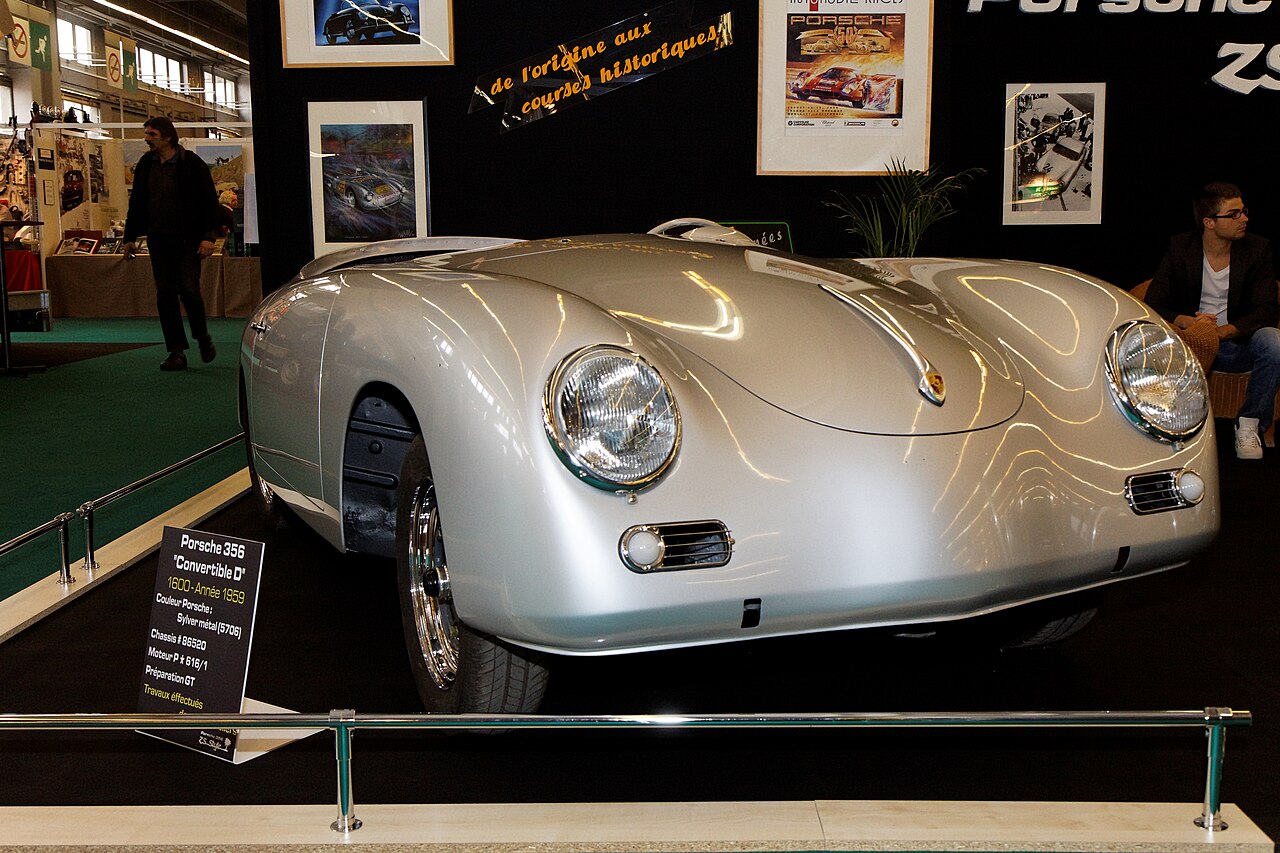
A low-screen Speedster and a Convertible D are different ownership propositions: Porsche describes the Speedster with reduced trim and a rain top, while the Convertible D has retractable side windows. Inspect the roof and glazing actually fitted. Source: Porsche Speedster history; Porsche Classic: 356 A.
356 inspection and ownership questions
Ask a 356 specialist to reconcile chassis, engine and transmission identification with the available factory and restoration records. Request invoices and photographs from before paintwork; ask which structural panels were repaired or replaced and inspect the underside, door fit and roof openings. A shiny finish is not evidence of original metal.
Record the installed braking system, wheels and engine before ordering parts or comparing cars. A Carrera needs a different mechanical discussion: Porsche describes its Fuhrmann engine with four overhead camshafts, shaft drive and dual ignition. Ask who last serviced that particular engine and what work is documented. Source: Porsche Classic: 356 B.
For an open car, demonstrate roof erection, side-window fit and storage of removable equipment. For any body, request a cold start and an independent inspection covering leaks, braking, steering and corrosion. These are questions to put to the inspector, not an assertion that a particular model or pictured car has a defect.
356 Variants
The 356 breaks down first by series, then by open and closed bodies, with Carrera cars sitting in their own four-cam lane.
The earliest shape and detail set, with the most delicate trim and the greatest premium on original metal.
Body
Coupe, cabriolet, early roadster
Engine
Air-cooled flat-four
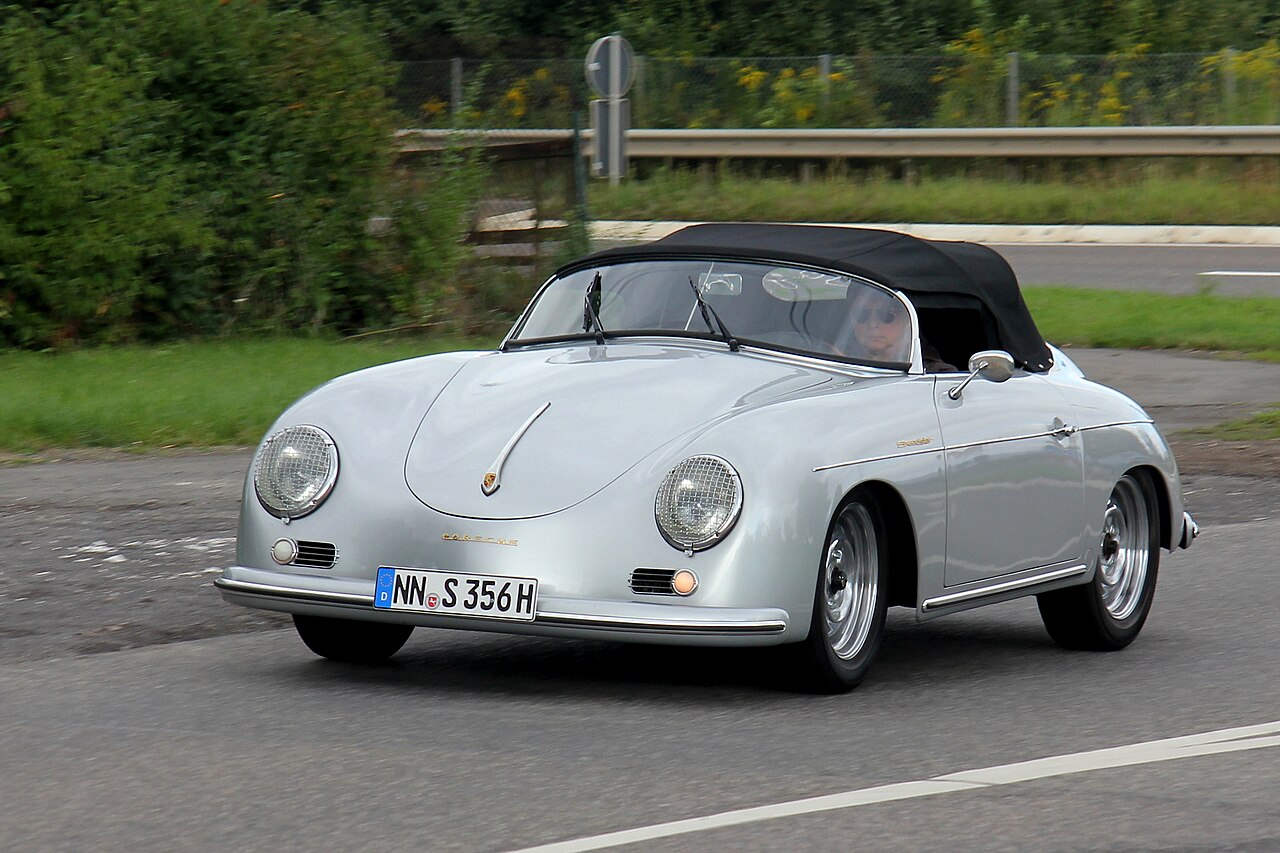
Pictured example: silver-white. Original factory paint and paint code are not verified.Photo: Ermell, CC BY-SA 4.0License termsDownloaded as a Wikimedia Commons 1280px thumbnail for local display.
Series
1955-1959
356 A
Sharper road manners and the classic Speedster period, with Carrera four-cam cars entering the story.
Body
Coupe, cabriolet, Speedster, Convertible D
Engine
1.6-liter flat-four family
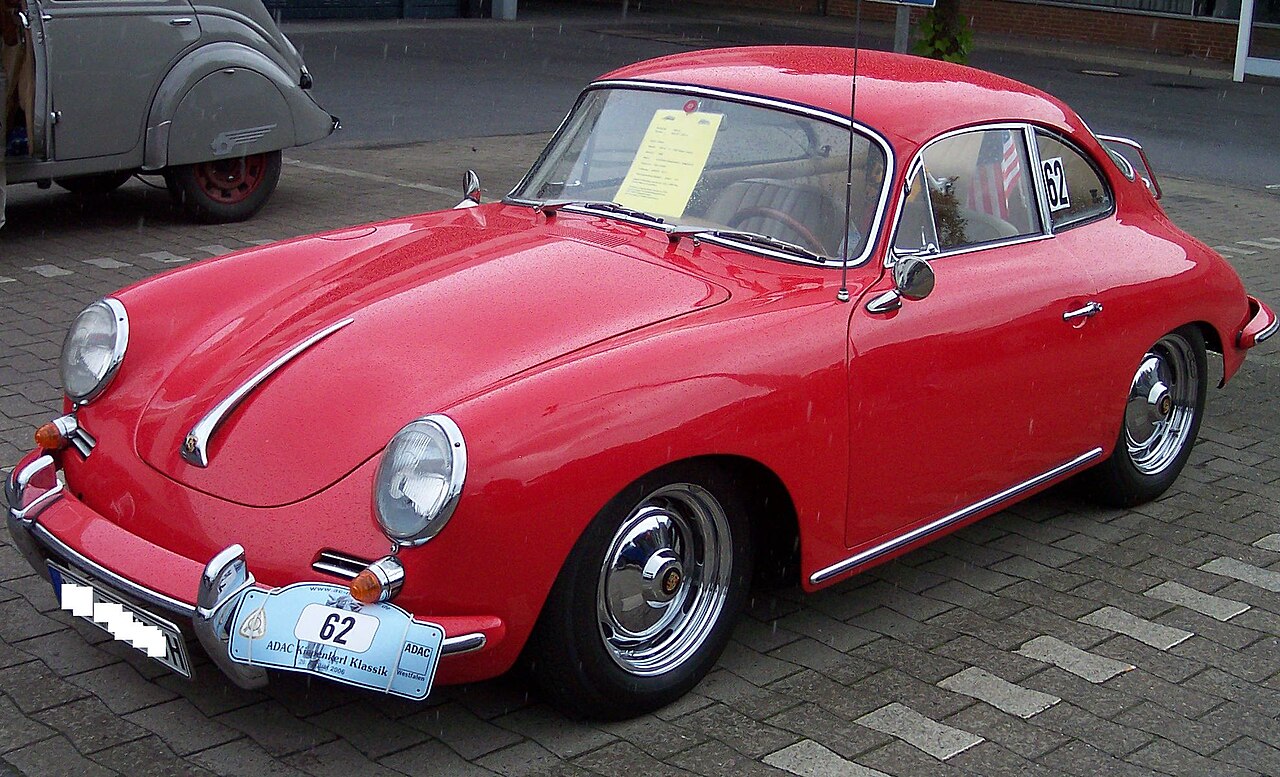
Pictured example: red. Original factory paint and paint code are not verified. Local image inspected; the stored Commons source page could not be retrieved during this audit. Precise variant identification remains unverified.Photo: Vauxford, CC BY-SA 4.0License termsDownloaded as a Wikimedia Commons 1280px thumbnail for local display.
Series
1959-1962
356 B T5
The first major B-series facelift, recognized by the higher bumpers and headlamps.
Body
Coupe, cabriolet, Roadster
Engine
Flat-four, including Super and Super 90
Pictured example: red. Original factory paint and paint code are not verified.Photo: Stahlkocher, CC BY-SA 3.0License termsDownloaded as a Wikimedia Commons 1280px thumbnail for local display.
Series
1962-1963
356 B T6
A short bridge to the C, with the external fuel filler, twin rear grilles, and larger rear window.
Body
Coupe, cabriolet, Roadster, Karmann hardtop
Engine
Flat-four, including Super 90
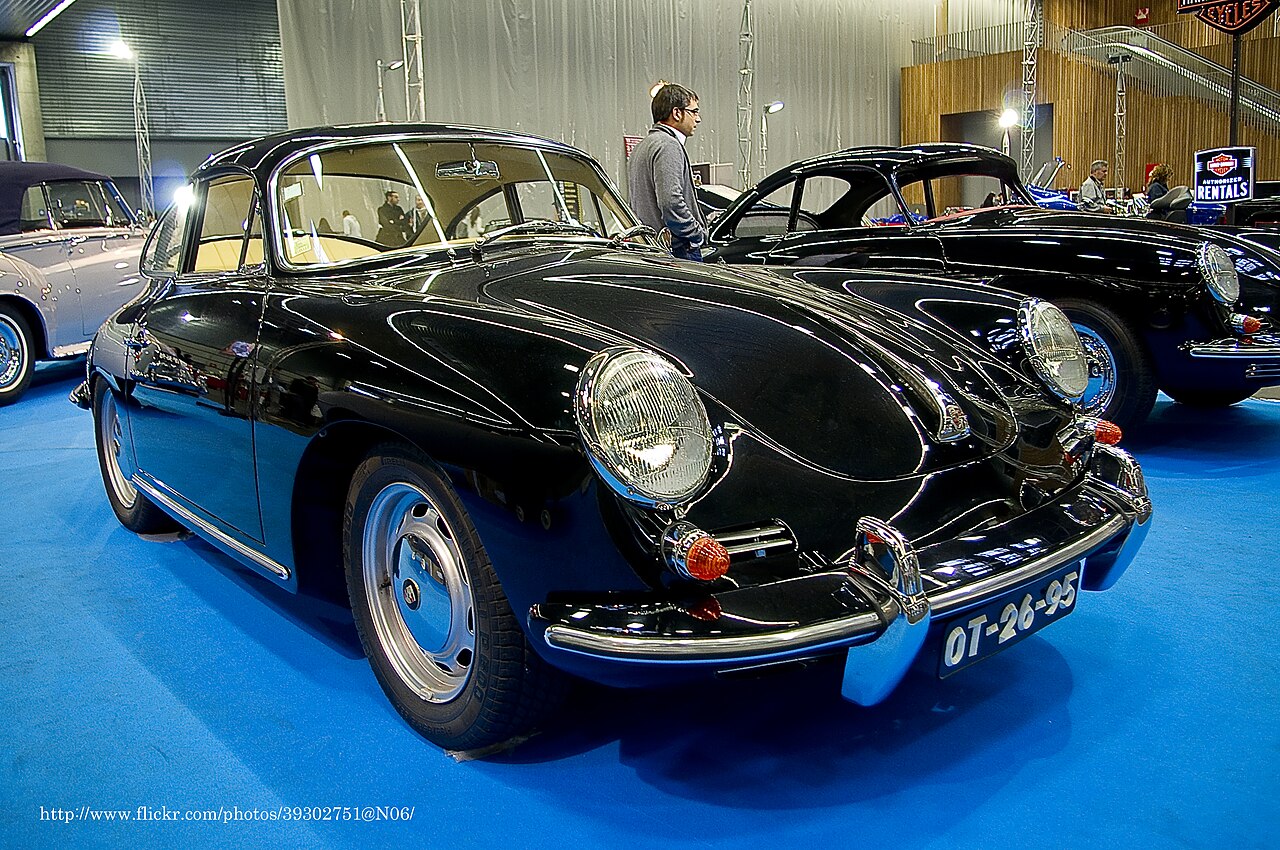
Pictured example: black. Original factory paint and paint code are not verified. Local image inspected; the stored Commons source page could not be retrieved during this audit. Precise variant identification remains unverified.Photo: Spanish Coches, CC BY 2.0License termsDownloaded as a Wikimedia Commons 1280px thumbnail for local display.
Series
1963-1965
356 C
The final 356 run, visually close to the B but easier to live with thanks to standard disc brakes.
Body
Coupe and cabriolet
Engine
1600 C, 1600 SC, and Carrera 2
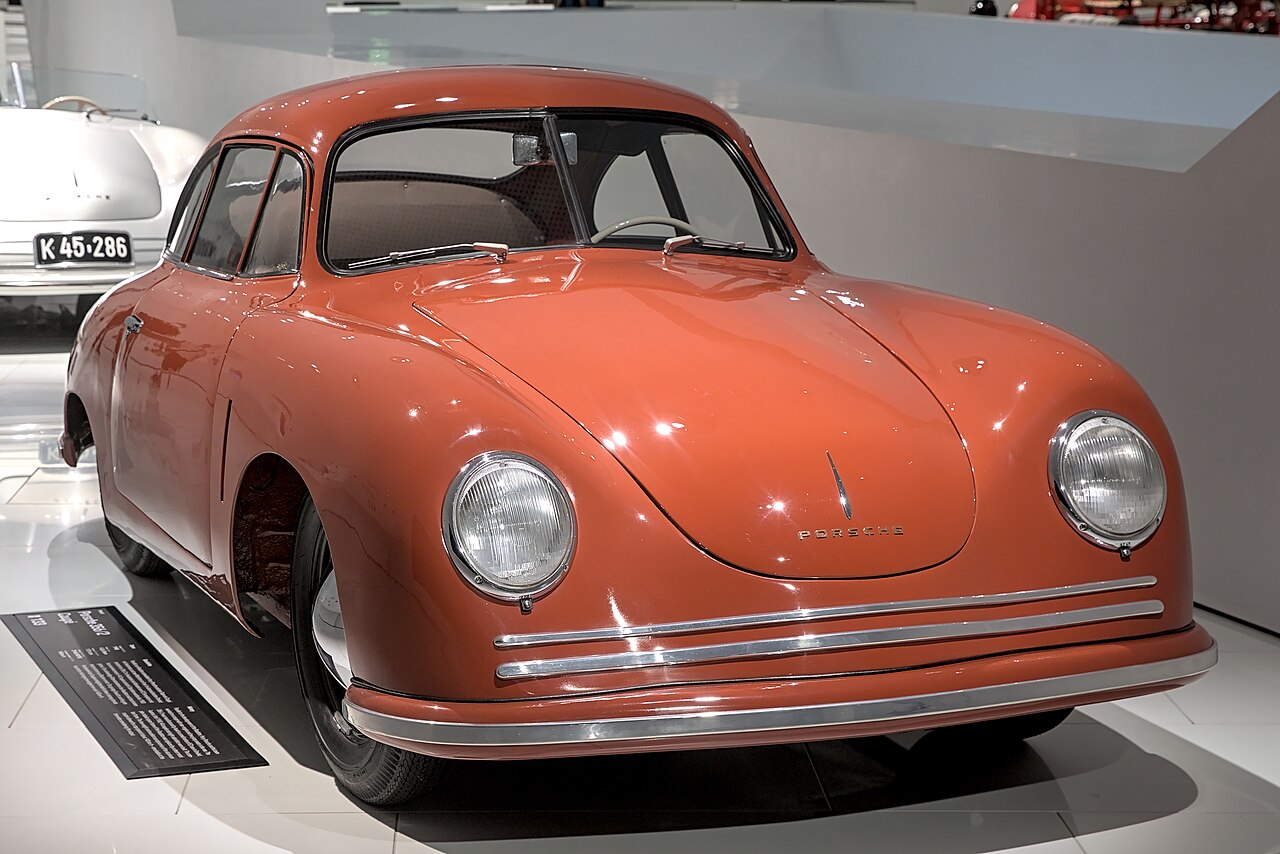
Pictured example: orange-red. Original factory paint and paint code are not verified. Local image inspected; the stored Commons source page could not be retrieved during this audit. Precise variant identification remains unverified.Photo: Alexander Migl, CC BY-SA 4.0License termsDownloaded as a Wikimedia Commons 1280px thumbnail for local display.
Body
1948-1965
Coupe
The purest read of the roofline, often the best way to study body fit, glass, trim, and stance.
Body
Fixed roof
Engine
Flat-four range
Pictured example: white with a dark fabric roof. Original factory paint and paint code are not verified. Local image inspected; the stored Commons source page could not be retrieved during this audit. Precise variant identification remains unverified.Photo: Lothar Spurzem, CC BY-SA 2.0 deLicense termsDownloaded as a Wikimedia Commons 1280px thumbnail for local display.
Body
1949-1965
Cabriolet
The more formal open 356, valued for correct top hardware, doors, and matching trim details.
Body
Open top
Engine
Flat-four range
Pictured example: white with a dark fabric roof. Original factory paint and paint code are not verified. Local image inspected; the stored Commons source page could not be retrieved during this audit. Precise variant identification remains unverified.Photo: Lothar Spurzem, CC BY-SA 2.0 deLicense termsDownloaded as a Wikimedia Commons 1280px thumbnail for local display.
Body
1954-1958
Speedster
The elemental American-market icon: light, simple, and far more sensitive to originality than it looks.
Body
Low-screen open car
Engine
Flat-four range
Pictured example: silver. Original factory paint and paint code are not verified. Local image inspected; the stored Commons source page could not be retrieved during this audit. Precise variant identification remains unverified.Photo: Thesupermat, CC BY-SA 3.0License termsDownloaded as a Wikimedia Commons 1280px thumbnail for local display.
Body
1958-1959
Convertible D
The Drauz-built successor to the Speedster, with more comfort while keeping the short-run collector appeal.
Body
Open top
Engine
Flat-four range
Pictured example: blue with a dark fabric roof. Original factory paint and paint code are not verified.Photo: Alexander Migl, CC BY-SA 4.0License termsDownloaded as a Wikimedia Commons 1280px thumbnail for local display.
Body
1959-1962
Roadster
The B-era open sport body, split across Drauz and D'Ieteren production in the details collectors inspect.
Body
Open top
Engine
Flat-four range
Pictured example: red. Original factory paint and paint code are not verified. Replaced the unrelated Carrera coupe illustration with the red T5 example categorized by Commons as a Karmann Notchback. This same image also illustrates the T5 series card.Photo: Vauxford, CC BY-SA 4.0License termsDownloaded as a Wikimedia Commons 1280px thumbnail for local display.
Body
1961-1962
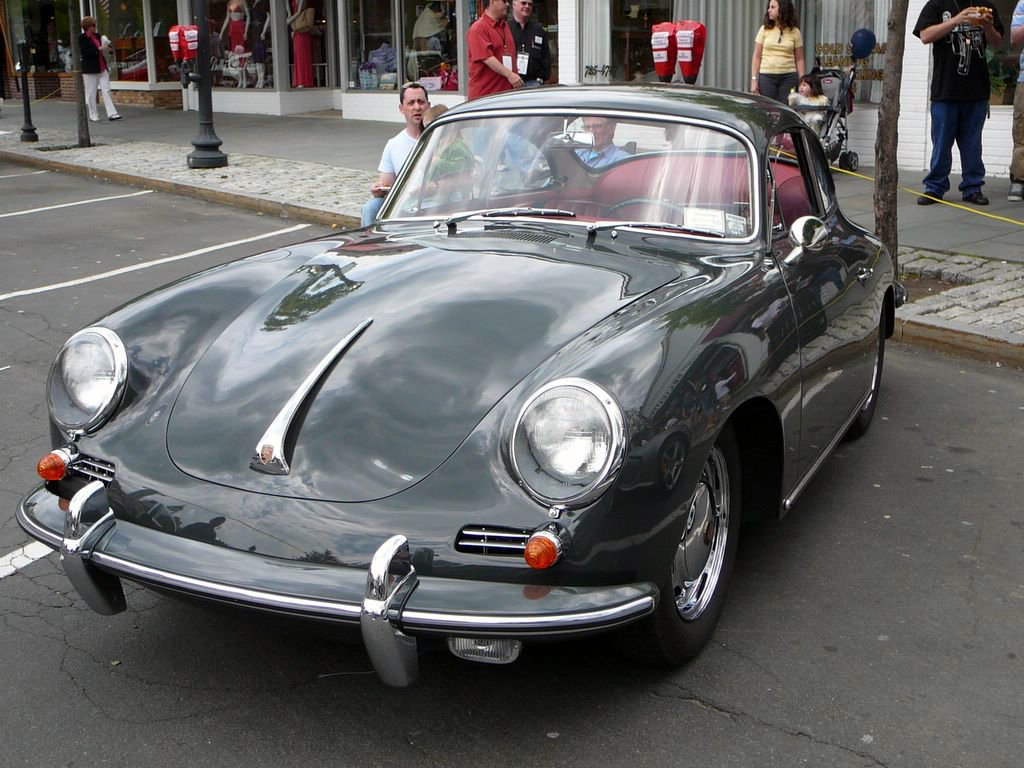
Karmann hardtop / Notchback
A distinctive short-lived Karmann body style that trades on rarity, roofline, and condition.
Body
Fixed hardtop profile
Engine
Flat-four range
Pictured example: dark grey. Original factory paint and paint code are not verified. Local image inspected; the stored Commons source page could not be retrieved during this audit. Precise variant identification remains unverified.Photo: Brett Weinstein (Wikipedia User: Nrbelex ), CC BY-SA 2.5License termsDownloaded as a Wikimedia Commons 1280px thumbnail for local display.
Performance
1955-1965
Carrera / Carrera 2
The competition-bred 356 branch, where engine identity, documentation, and correctness dominate the car.
Body
Coupe, cabriolet, Speedster, Roadster
Engine
Fuhrmann four-cam flat-four
356 collector perspective
The 356 is the origin point. It carries the Volkswagen-derived idea forward, but the appeal is not nostalgia for a borrowed platform. The appeal is the way Porsche learned to make lightness feel expensive.
The early cars are intimate and handmade; the later A, B, and C cars are easier to use without losing the scale. Speedsters and open cars get the easy attention, but the coupes explain the shape best.
The collector read starts with originality. Matching mechanicals, honest metal, correct trim, and body style matter more than cosmetic freshness. A restored car can be wonderful, but the paperwork has to keep up with the shine.
Research sources and evidence limits
Manufacturer histories support the dated identification facts cited above. Comparison questions and inspection prompts are editorial guidance, not a report from inspecting these photographed cars. Existing variant periods are orientation ranges; verify the individual build specification before purchase.
Porsche Classic: 356 A — Porsche. Curved windscreen, Convertible D windows and Carrera designation. Reviewed 2026-09-20.
Porsche Classic: 356 B — Porsche. T5/T6 changes and Fuhrmann engine construction. Reviewed 2026-09-20.
Porsche Classic: 356 C — Porsche. Standard disc brakes and final delivery date. Reviewed 2026-09-20.
Porsche Speedster history — Porsche. 1954 Speedster introduction and reduced weather equipment. Reviewed 2026-09-20.
Photo credits identify the image source and recorded license separately. No current transaction dataset, original measurements or firsthand road test supports this guide. We do not publish a price estimate or condition score. Read our editorial method and corrections policy.